
Browne Brief Vol. 3: Behind the Design with Kolton McConkey Browne Brief Vol. 3: Behind the Design with Kolton McConkey
23 Jun , 2026
Vol 3. of the Browne Brief takes us into the thoughtful, whimsical and creative world of Product Development, where all great ideas are transformed into actual products.

From the first sketch on paper to a finished product, industrial design is a process that blends creativity, problem-solving, and manufacturing expertise.


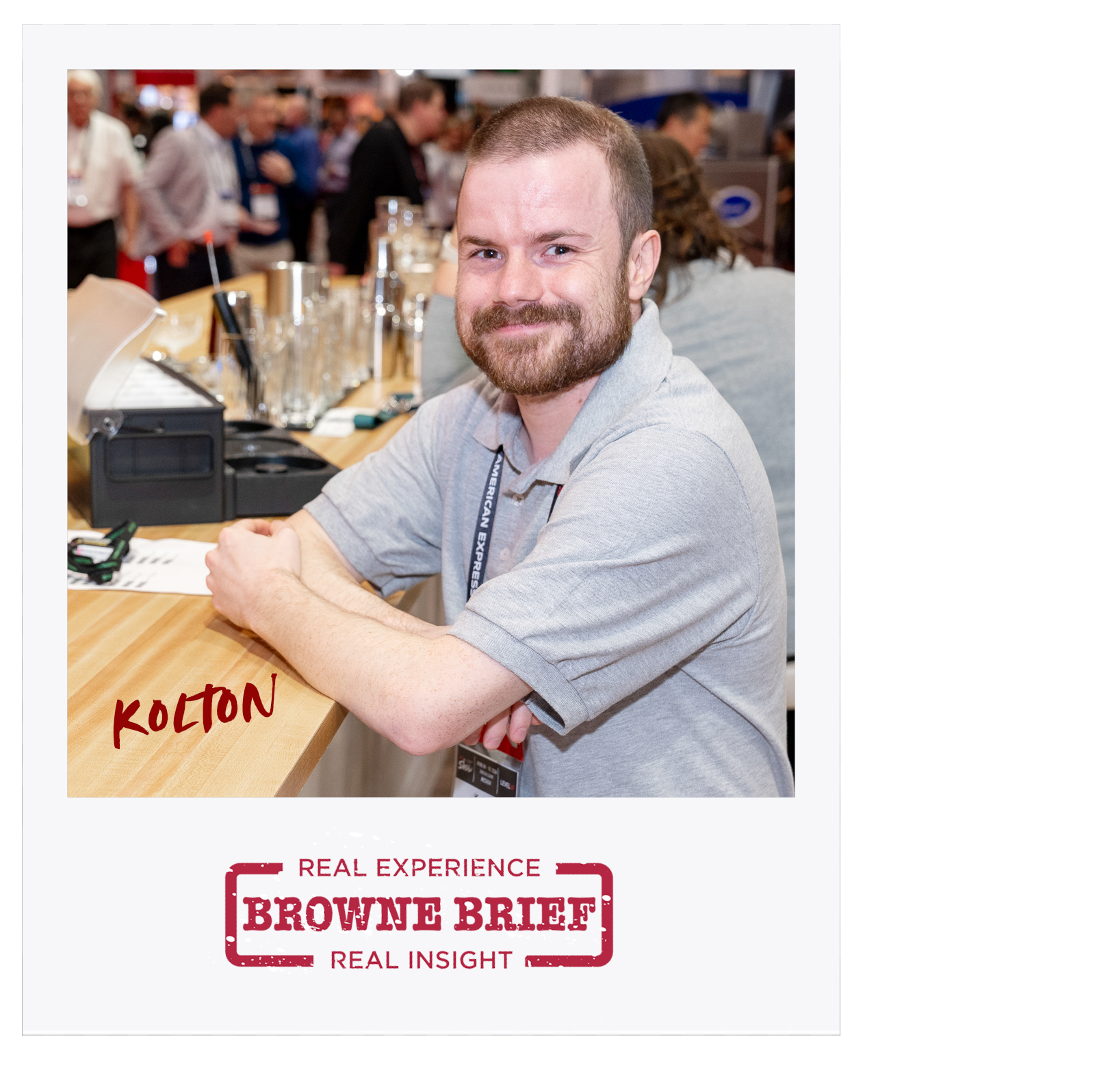
Meet Kolton McConkey, Industrial Designer

Kolton’s journey into industrial design began with a curiosity about how things are made and what makes them work.

More than six years into his design career, that curiosity has evolved into a practical, hands-on role creating the products people use every day, from cookware and bakeware to dinnerware and utensils. For Kolton, one of the most fulfilling parts of the process is seeing an idea move from sketch to finished product. There’s something especially rewarding about spotting something you’ve put much thought and care into on a store shelf or being used in a professional kitchen or at home with friends and family. That appreciation for thoughtful, purposeful design extends beyond work as well, whether he’s spending time on the golf course or exploring Ontario’s hiking trails.


             with Kolton McConkey

Q. When you’re starting a new design, what’s usually the biggest source of inspiration?

A. I'd say when I'm looking for inspiration for a project, I don't really limit myself to one source. Inspiration can really come from anywhere.  I like to explore a variety of industries and perspectives. I subscribe to newsletters focused on architecture, design, and engineering because I think if I only look within the kitchenware industry, my perspective becomes too narrow.

When you look outside your own industry, you realize there are already a lot of creative solutions being used in different fields. Those ideas can often inspire new ways of approaching a design challenge.

Social media is another great source of inspiration. I follow a lot of design and art-focused accounts, and one publication I regularly read is Dezeen. It's primarily architecture-focused, but it covers such a broad range of design topics that there's always something interesting to discover. 


Q. You recently returned to your alma mater as a judge. what does that feel like to have graduated from there? How it feels like to inspire the young generation?

A. Graduating from that program was a great experience. There was a strong community within the industrial design program, and I spent countless hours working alongside classmates on projects. Those experiences helped shape my career and created relationships that I still value today.

Returning as a judge was incredibly rewarding because I was able to see the process from the other side.

I remember how challenging and stressful those projects could feel as a student, but I also remember how rewarding they were. Being able to provide feedback, answer questions, and help students work through challenges was a great experience.

What stood out most was seeing their growth throughout the project. Watching where they started and where they finished was really impressive. The amount of effort, creativity, and dedication they put into their work was inspiring, and it was rewarding to be part of that journey.


Kolton rendering a 3D printed prototype

Q. What’s it like seeing one of your designs move from concept to a product people use every day?

A. It's fantastic. There's something really special about seeing an idea that once existed only in your head become a physical product that people can hold, use, and interact with every day.
The process is long - from the initial sketches and CAD models to manufacturing reviews, prototypes, samples, and final production; seeing it all come together makes it worthwhile.

One thing that's always in the back of my mind throughout the entire process is manufacturability. It's great to design something that looks beautiful, but if it can't be manufactured efficiently, it can't move forward. Every decision needs to consider the production process, materials, and manufacturing capabilities.

One of the most rewarding parts is hearing feedback from customers. When someone tells me they enjoy using a product I've designed, it reminds me of why I love what I do.
Knowing that something you've spent months developing is helping someone in their kitchen, improving their experience, or making a task easier is incredibly rewarding. That's what makes the entire process worth it.


We’ll continue to share the voices, stories, and expertise of the people behind Browne: the ones who help bring value to our partners every day.

Follow along to learn more from our team in the next edition of the Browne Brief.


Vol 3. of the Browne Brief takes us into the thoughtful, whimsical and creative world of Product Development, where all great ideas are transformed into actual products.

From the first sketch on paper to a finished product, industrial design is a process that blends creativity, problem-solving, and manufacturing expertise.


Meet Kolton McConkey, Industrial Designer

Kolton’s journey into industrial design began with a curiosity about how things are made and what makes them work.

More than six years into his design career, that curiosity has evolved into a practical, hands-on role creating the products people use every day, from cookware and bakeware to dinnerware and utensils. For Kolton, one of the most fulfilling parts of the process is seeing an idea move from sketch to finished product. There’s something especially rewarding about spotting something you’ve put much thought and care into on a store shelf or being used in a professional kitchen or at home with friends and family. That appreciation for thoughtful, purposeful design extends beyond work as well, whether he’s spending time on the golf course or exploring Ontario’s hiking trails.


             with Kolton McConkey

Q. When you’re starting a new design, what’s usually the biggest source of inspiration?

A. I'd say when I'm looking for inspiration for a project, I don't really limit myself to one source. Inspiration can really come from anywhere.  I like to explore a variety of industries and perspectives. I subscribe to newsletters focused on architecture, design, and engineering because I think if I only look within the kitchenware industry, my perspective becomes too narrow.

When you look outside your own industry, you realize there are already a lot of creative solutions being used in different fields. Those ideas can often inspire new ways of approaching a design challenge.

Social media is another great source of inspiration. I follow a lot of design and art-focused accounts, and one publication I regularly read is Dezeen. It's primarily architecture-focused, but it covers such a broad range of design topics that there's always something interesting to discover. 


Q. You recently returned to your alma mater as a judge. what does that feel like to have graduated from there? How it feels like to inspire the young generation?

A. Graduating from that program was a great experience. There was a strong community within the industrial design program, and I spent countless hours working alongside classmates on projects. Those experiences helped shape my career and created relationships that I still value today.

Returning as a judge was incredibly rewarding because I was able to see the process from the other side.

I remember how challenging and stressful those projects could feel as a student, but I also remember how rewarding they were. Being able to provide feedback, answer questions, and help students work through challenges was a great experience.

What stood out most was seeing their growth throughout the project. Watching where they started and where they finished was really impressive. The amount of effort, creativity, and dedication they put into their work was inspiring, and it was rewarding to be part of that journey.


Kolton rendering a 3D printed prototype

Q. What’s it like seeing one of your designs move from concept to a product people use every day?

A. It's fantastic. There's something really special about seeing an idea that once existed only in your head become a physical product that people can hold, use, and interact with every day.
The process is long - from the initial sketches and CAD models to manufacturing reviews, prototypes, samples, and final production; seeing it all come together makes it worthwhile.

One thing that's always in the back of my mind throughout the entire process is manufacturability. It's great to design something that looks beautiful, but if it can't be manufactured efficiently, it can't move forward. Every decision needs to consider the production process, materials, and manufacturing capabilities.

One of the most rewarding parts is hearing feedback from customers. When someone tells me they enjoy using a product I've designed, it reminds me of why I love what I do.
Knowing that something you've spent months developing is helping someone in their kitchen, improving their experience, or making a task easier is incredibly rewarding. That's what makes the entire process worth it.


We’ll continue to share the voices, stories, and expertise of the people behind Browne: the ones who help bring value to our partners every day.

Follow along to learn more from our team in the next edition of the Browne Brief.